Announcing the Aquarry pilot
Why we made our own “pit lake”
Mining startups have a chicken-and-egg problem. Mining is an industry where no one wants to be first, everyone wants to be second. Mining customers want to see technology maturity and scale before they’ll take a risk, but the people who fund that scale-up want customer traction first. Chicken. Egg.
The problem
The mining industry is conservative about new technology, and for good reason. A failure on site risks lives, billions in repairs, environmental damage, fines, and international headlines. Does the average miner want a startup with only lab and model results operating on their site? Hell no. The burden of proof is high.
So what is a mining startup to do? How do you demonstrate mining-relevant scale before you can even operate in a mine?
What Aquarry does
Aquarry puts past-production mines to beneficial use while they're being reclaimed. We help miners and governments turn flooded open-pit mines, commonly known as pitlakes, into carbon sinks. Our process shrinks tailings piles, backfills pits, and makes metal extraction from tailings more economical while reducing spendon carbon offsets and taxes—major liabilities for mining companies. What’s more, our process improves social license for mining by introducing a truly beneficial end use for open-pit mines that restores the pre-mining landscape. And as we’ve learned from the datacenter buildout, social license has a material effect on the bottom line.
Our lab and model results are strong, environmental risks are low, and mining companies want our product when it’s at scale. But we still need to demonstratethe technology safely outside the lab to build our legitimacy before anyone will welcome us into a real pit lake. And that isn't easy.
The pilot
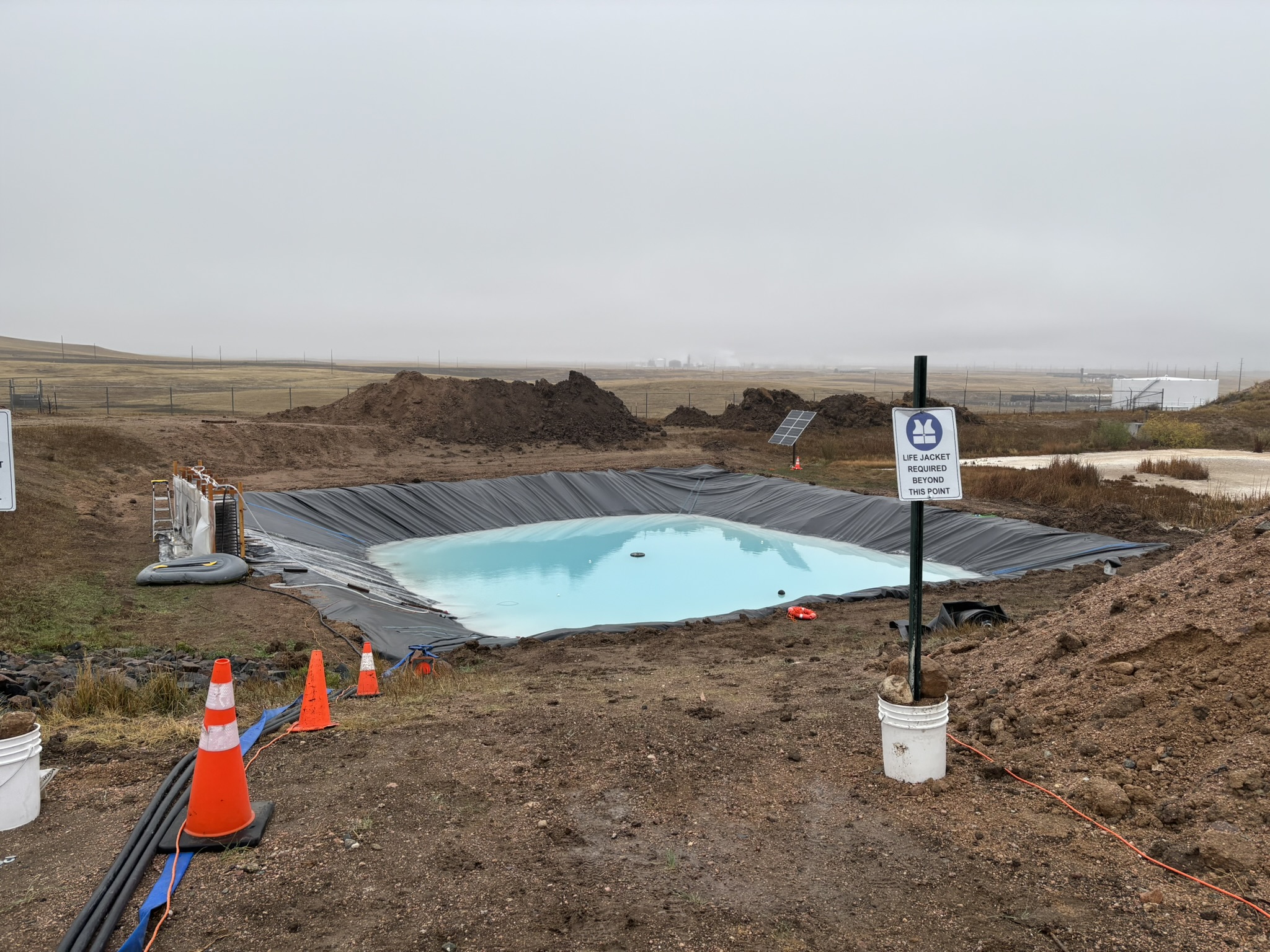
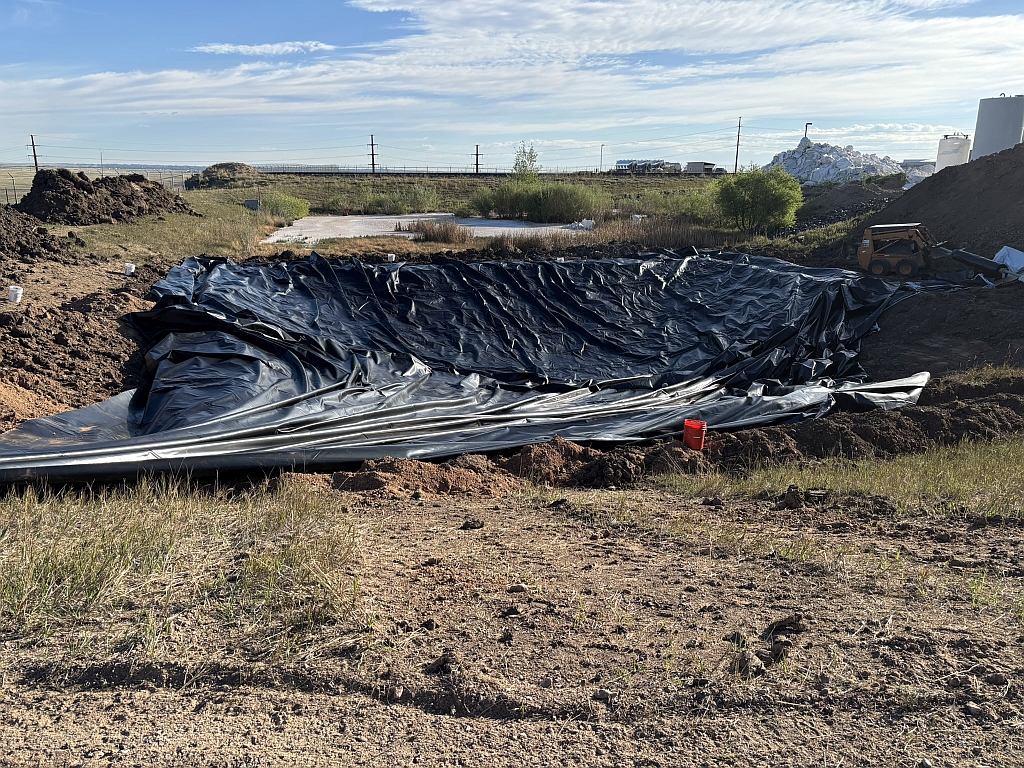
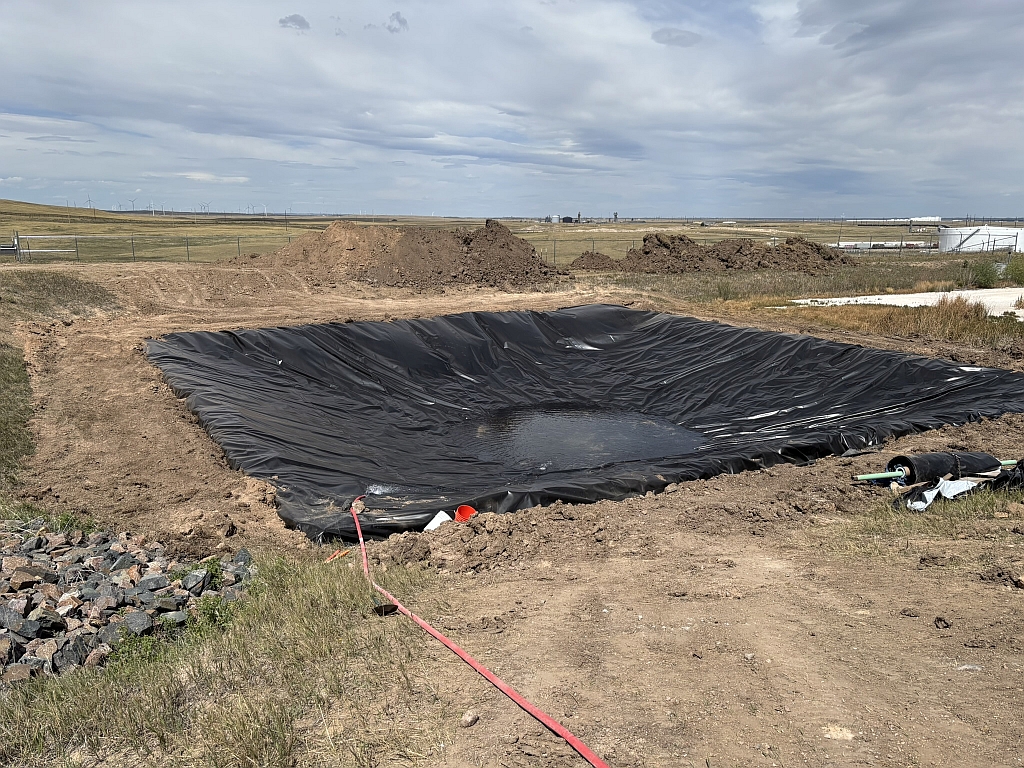
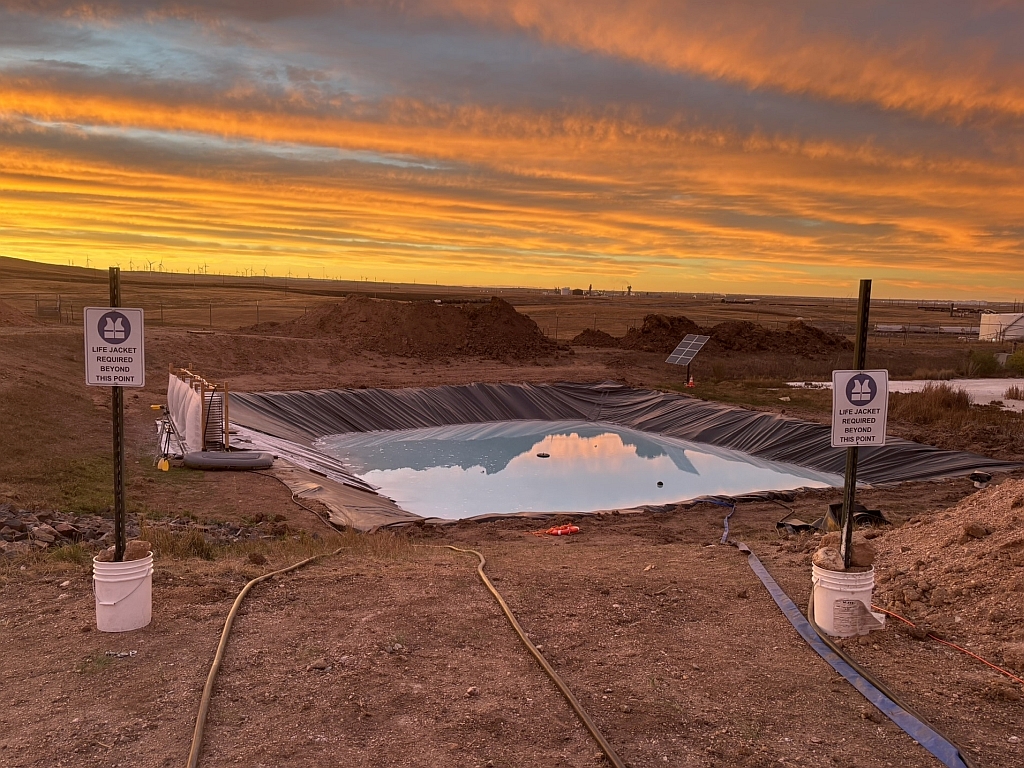
So we built our own “pit lake.” We dug a really big hole, installed an impermeable liner, and filled it with water to make an imitation pit lake. The liner and the temporary nature of the pond meant we didn't need new permits (yes, we confirmed this with the local regulators!). We controlled the size: the pit is 80x80x10 feet (24x24x3 meters) so that we're scaling up by an appropriate-yet-meaningful factor of 1,000x as compared with our biggest in-lab demonstration in a tank.
The pilot is up and running on an industrial site in Wyoming, hosted by specialty chemical producer Garrison Minerals. Garrison had 150 tons of ground alkaline ore on site that they couldn’t use and would have to pay to dispose of. Having another use for it—one that costs them nothing and would lead to future revenue if successful—is a nice value proposition.
Scaling up with extreme capital efficiency
Hardtech startups often stall at scale-up. We sized this project to be both meaningful and reasonable: it’s big enough to demonstrate scalability, small enough that it’s not trying to do too much. And that reasonable scale-up factor of 1,000x (plus a whole lot of creative scrappiness) has kept our costs extraordinarily low. We sourced equipment from resellers and scrap yards and borrowed when we could. We worked with an engineering firm, Next Rung Technology, that fully understands the level of engineering needed at our stage. We hauled rocks and mixed concrete ourselves when our temp labor didn't show up. Total capex so far, all in, is $180,000. And for the vast majority of the build Aquarry had a headcount of two (soon to be three, but that's another announcement).
What the pilot will answer
This pilot answers the biggest questions our customers and our team have that we couldn't answer in the lab:
- How does an outdoor environment with wind, rain, UV, native microbes, and variable temperatures affect carbon uptake and mineralization?
- What happens when the lake freezes?
- Is gravity-driven aeration sufficient or do we need to do more?
- Most importantly, how do all of these affect long-term water quality?
There’s much, much more to come.
Thank yous
While we had an internal team of two, many other people and organizations made this pilot possible. The Schmidt Family Foundation funded this project through a "grantvestment" via the Neta Foundation. Garrison Minerals welcomed us on site to build the pit, take their mineral storage piles for our feedstock, and borrow a whole lot of equipment. Big Blue Technologies, our neighbors on the site, helped us out with everything from receiving our equipment when we were off-site to lending us shovels. We also worked with some great external firms, including Next Rung Technology (engineering) and Vandenberg Water Science (mass balance modeling).
Work with us
If you're a pit lake owner curious about using your site to reduce emissions,avoid carbon taxes, and improve social license, give us a shout.
If you're an investor or grantmaker looking for driven, capital-efficient startups building highly differentiated technology that's easy to scale, we're kicking off our seed raise later this year and we'd love to chat.
